What WETT means
WETT stands for Wood Energy Technology Transfer. It is the non-profit body in Canada that trains and certifies people who install, inspect and sweep wood-burning systems: fireplaces, inserts, stoves and the chimneys that serve them. A WETT-certified technician has passed its courses and exams and holds a current certificate number.
A "WETT inspection" is an inspection of a wood-burning system carried out by a WETT-certified person, checking it against the installation code (CSA B365) and the manufacturer's clearances, and written up in a report.
Who asks for one
- Insurance companies. Most Ontario insurers ask for a WETT inspection before they insure a home with a wood-burning fireplace or stove, and some ask for a new one when you renew or switch insurers. The report tells them the appliance is installed to code and the chimney is sound.
- Home buyers. A home inspector looks at the fireplace, but usually does not certify it. If you are buying a house with a wood stove or fireplace, a WETT inspection before closing tells you whether you are inheriting a working system or a rebuild.
- Homeowners who want to know. A fireplace that has not been used for years, a chimney with visible damage, a stove the previous owner installed — all reasons to have it checked before the first fire.
The three levels of inspection
WETT defines three levels. The right one depends on why you need it.
- Level 1 — Readily accessible. A visual check of everything that can be seen without tools or ladders: the appliance, its clearances to combustibles, the visible chimney, the cap, the connection. This is what most insurers ask for on an existing, unchanged installation.
- Level 2 — Accessible. Everything in Level 1, plus the parts reached with ladders and basic tools: the chimney from the roof, the attic where the chimney passes through, the flue interior. Usually recommended when a home changes hands or an appliance has been changed.
- Level 3 — Concealed. The parts that can only be reached by opening up walls or ceilings. Rare, and only called for when a Level 2 finds a problem that cannot be assessed without it.
What the technician actually checks
On a fireplace, in plain terms:
- The firebox and its lining, the damper, the smoke shelf and smoke chamber.
- The flue: the liner, whether it is intact, whether it is the right size for the appliance, and whether anything is blocking it.
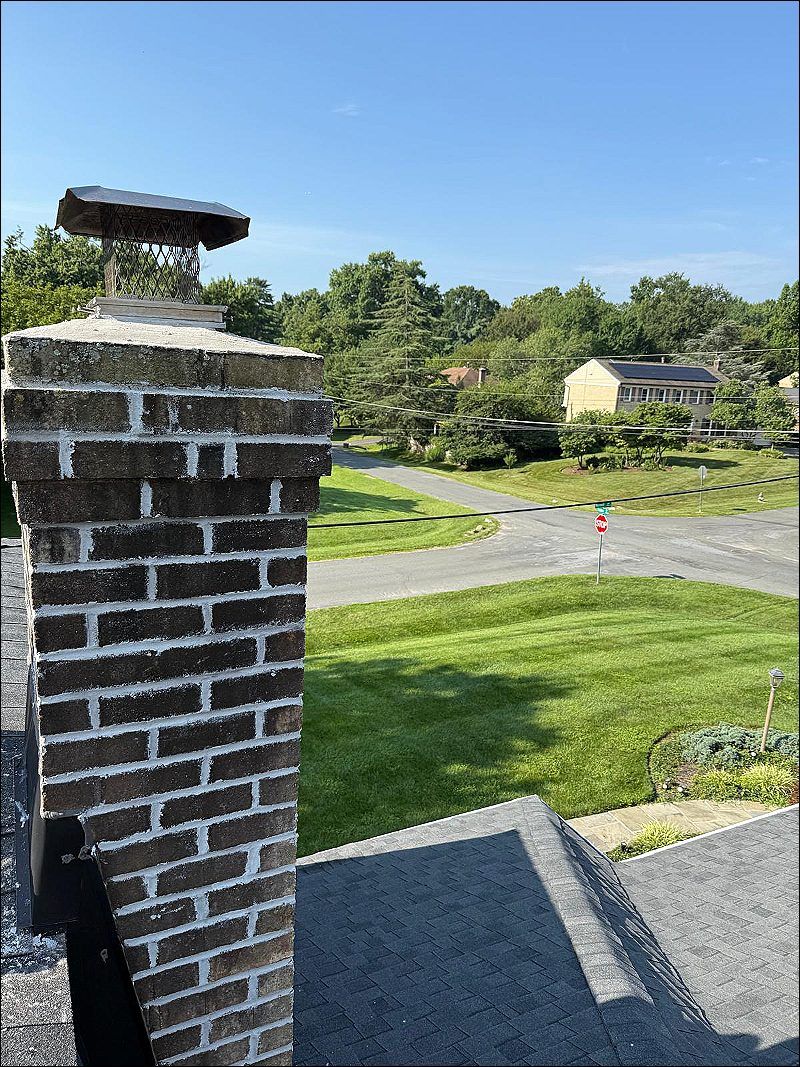
- The chimney outside: the cap, the crown, the mortar joints, the flashing, and the height of the chimney above the roof.
- Clearances: how far combustible materials — mantels, framing, trim — are from the firebox opening and from the chimney.
- On a stove or insert: the clearances around the unit, the floor protection, and the chimney connection.
A proper inspection comes with photos. If your report has no photos of the flue, it was not looked at.
What happens if it fails
A "fail" is a list of deficiencies, not a verdict on the house. The common ones are fixable: a missing cap, a cracked crown, open joints, a damper that does not seat, a flue that needs a liner, a clearance problem at the mantel. The report says what has to be corrected; once it is, a re-inspection confirms it and the insurer gets the updated report.
Our approach: you get the photos and a written price for each item, separately, so you can decide what to fix now and what can wait — and you can take the report to anyone for a second opinion.
How Northmark handles it
Our technician is WETT-certified. The standard inspection — 19 points inside and out, with photos — is free at your home anywhere in Toronto and the GTA. If your insurer or your lawyer needs a formal WETT report, say so when you book; we confirm what your insurer is asking for and what, if anything, it costs before we come. See chimney inspections.