1. A stain on the ceiling or wall near the chimney
The classic sign. A brown or yellow stain on the ceiling beside the chimney breast, or on the wall above the fireplace, that darkens after heavy rain or a thaw.
Usually: the flashing — the metal where the chimney meets the roof — has pulled away from the brick, cracked, or was sealed with tar that has dried out. Water runs down the outside of the chimney and into the roof deck.
The fix: new step and counter flashing, set into the mortar joints, not tarred over. See flashing and waterproofing.
2. Water or rust in the firebox
A damp firebox after rain, rust on the damper, rust streaks on the back wall, or a puddle on the hearth of a fireplace that has not been used.
Usually: no cap, or a cap that has rusted through. Rain falls straight down the flue. A damper that no longer seals lets it through to the firebox.
The fix: a stainless steel cap sized to the flue. One of the cheapest repairs on a chimney, and one of the most skipped. See chimney caps.
3. White staining on the brick
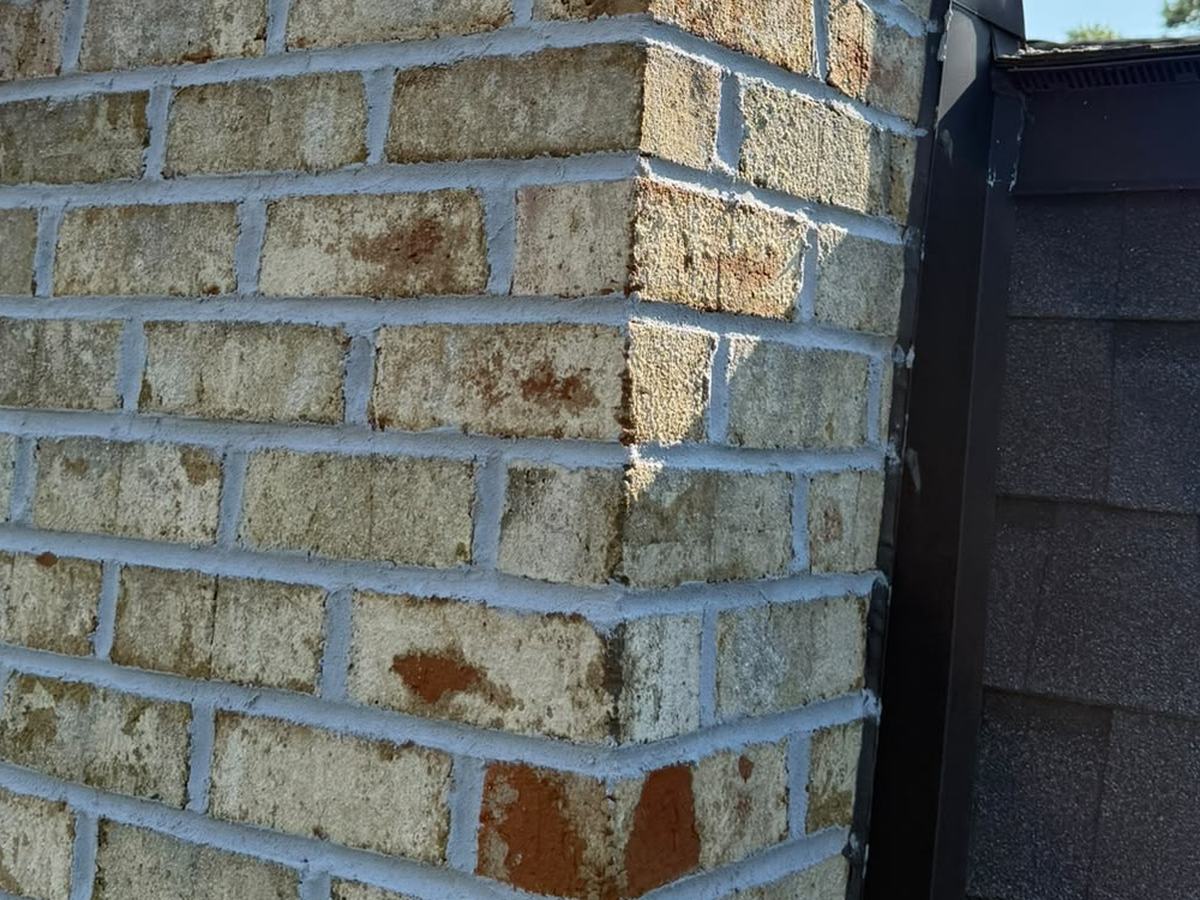
A white, powdery or crusty deposit on the outside of the chimney, often in patches. It is called efflorescence: minerals carried out of the brick by water and left behind when it dries.
Usually: water is soaking into the masonry — through open joints, a cracked crown, or brick that has lost its face — and drying out through the surface. The white is the symptom; the water path is the problem.
The fix: find where the water enters (the inspection), close it (crown, joints, cap), and only then clean the staining.
4. Spalling or flaking brick
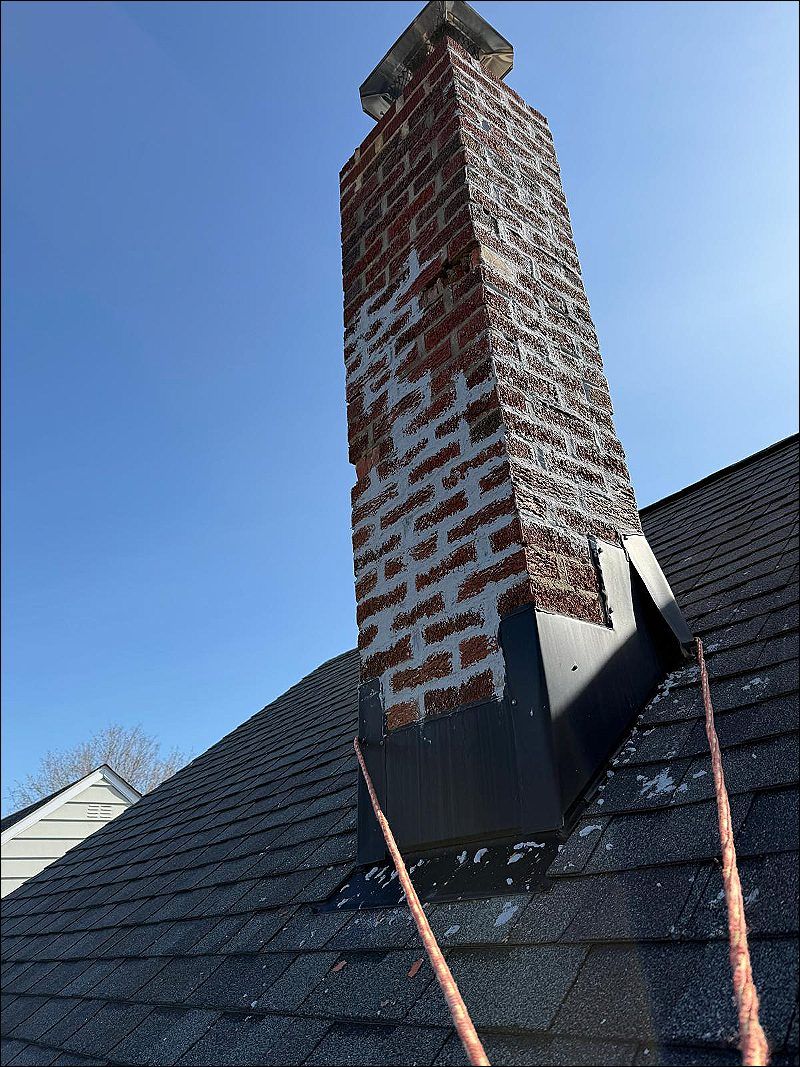
Bricks whose faces have popped off, leaving a rough, lighter surface, with the flakes on the roof or the ground below.
Usually: water got into the brick and froze. Toronto's freeze-thaw cycles do this to brick that is saturated. It is the stage after efflorescence, and it does not stop on its own.
The fix: replace the damaged brick, repoint the joints, and stop the water getting in. Left alone, this becomes a rebuild above the roofline. See masonry and tuckpointing.
5. A cracked or crumbling crown
The crown is the concrete top of the chimney, around the flue. From the ground it looks fine; from the roof, cracks and missing pieces are common.
Usually: age and weather. A thin, flat crown with no overhang cracks early and lets water straight into the top course of brick.
The fix: a new crown, poured or formed, with a slope and an overhang so water runs off the chimney rather than into it. See chimney repair.
6. A musty or smoky smell after rain
A smell from the fireplace on wet days — damp, musty, or like old smoke.
Usually: water is reaching creosote in the flue or smoke chamber and releasing its smell. It can also mean a nest or debris above the damper that is holding moisture.
The fix: a sweep removes the creosote; the cap or crown repair removes the water. One without the other brings the smell back.
7. Wallpaper or paint peeling near the chimney breast
Paint bubbling or wallpaper lifting on the wall beside or above the fireplace, sometimes with no visible stain.
Usually: moisture moving through the masonry into the room-side wall — the chimney is wet inside the house. The entry point is almost always at the top: the crown, the joints or the flashing.
The fix: the inspection, with photos from the roof. Guessing at this one gets expensive.
Where the water actually comes from
Across the chimneys we inspect in Toronto, leaks come from four places, in roughly this order: the flashing, a missing or failed cap, the crown, and open mortar joints. Most leaking chimneys have more than one. That is why the inspection comes first — fixing the obvious one and leaving the other means the stain comes back next spring.
The free inspection photographs all four from the roof and from inside, and you get the price for each in writing before anything starts.